India fascinates. It often intrigues. It always confuses.
Behind its 1.4 billion inhabitants, its promises of 7% growth, and its role as an active member of the BRICS, lies a country that is much more nuanced than the enthusiastic statements made at international forums would suggest.
To understand India and grasp the real challenges facing its trajectory in the 21st century, we must delve into its internal contradictions, its ambivalent international relations, and its emerging place in a de-Westernized and increasingly multipolar world.
Behind the promises I hear everywhere that India is going to become a giant of this century, there are actually colossal challenges: how to reconcile explosive population growth and endemic unemployment, geopolitical ambitions and industrial dependence, Hindu nationalism and social divisions?
In this article, I analyze the contradictions of a power that dreams of climbing into the world's top three but is heavily dependent on foreign imports, particularly from China, and is struggling to industrialize and modernize at a pace commensurate with its population growth.
Between the mirage of “Make in India,” the balancing act with the BRICS, and the social time bomb, join me in discovering why the “Asian century” will be a very intense and tense one for India.
Table of contents
- A power with three faces
- Internal fractures: the Achilles heel
- BRICS: on the geopolitical chessboard
- The West: the illusion of an alliance
- Laboratory of the multipolar world
A power with three faces
Fundamental forces: demographics, geography, and active diplomacy
For those who are unfamiliar with this country, let me quickly paint a picture for you.
India has significant natural assets, which will always work in its favor.
India's primary strength is its demographics.
Since 2023, India has been the most populous country in the world, surpassing China.
This human capital is a considerable asset, provided it is organized.
Secondly, its geography is strategic: located between the Middle East, Southeast Asia, and Eurasia, India is at the heart of global trade routes.
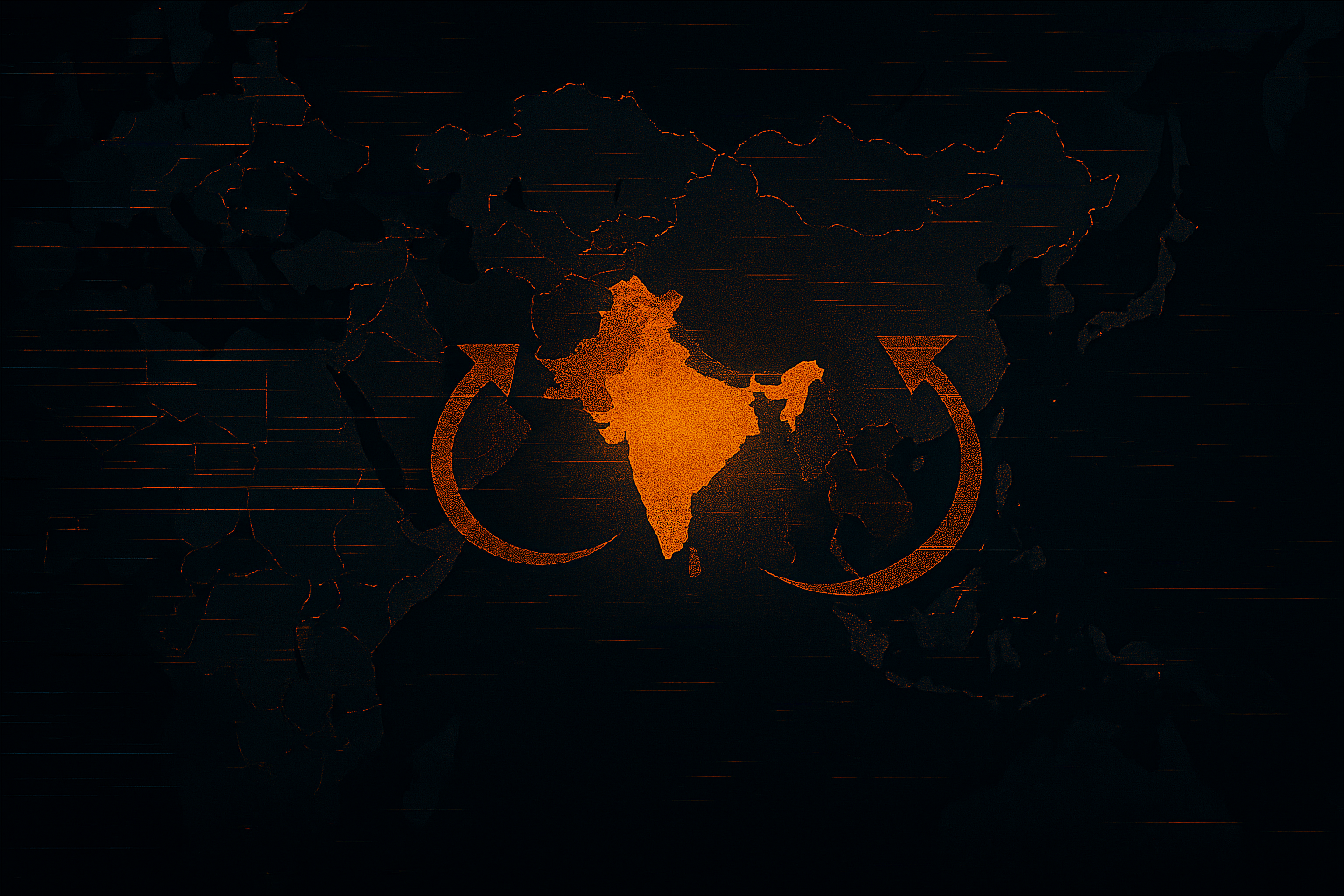
Often, if only in terms of logistics, it is very difficult to avoid India, as the country is such an essential bridge between China and the rest of the world, whether it be the West, the Middle East, or even Africa.
Finally, Indian diplomacy, based on the doctrine of Subrahmanyam Jaishankar, skillfully plays the “multi-alignment” card: cooperating with everyone without alienating anyone.
This logic allows India to talk to Washington and Moscow, Tel Aviv and Tehran, to sit at the BRICS table while also sitting at the Quad table.
An agile, balancing act, but one that could become schizophrenic if tensions between China and the US intensify, because during this century, there may (surely) come a time when it will be necessary to choose sides.
India's demographics: asset or mirage?
With 1.4 billion inhabitants, India is fueled by youth.
But this human reservoir hides a trap: how can 254 million workers be turned into an economic engine when 42% of graduates are unemployed?
The balance between human capital and structural constraints remains the major issue in India.
China, for its part, had successfully industrialized its workforce.
New Delhi, meanwhile, still imports its key pharmaceutical components... from Beijing.
Underutilized strategic geography
Between the Indian Ocean and the Himalayan mountain ranges, India is walking a tightrope.
Its fleet monitors the Strait of Malacca, a bottleneck through which 40% of maritime trade passes.
An asset that carries considerable weight in relation to China, but one that does not prevent New Delhi from being heavily dependent on Chinese imports.
The Jaishankar doctrine of “multi-alignment” reaches its limits here.
- Youth unemployment: 42% of graduates under 25 are unemployed despite 7% growth
- Failing education: an overcrowded school system that is inadequate for the needs of the 21st century
- Uncontrolled urbanization: 40% of city dwellers crammed into unsanitary slums
- Public health: uncertain access to healthcare for 600 million Indians
- Generational divide: 254 million potential workers versus marginalized seniors
This contrasting picture reminds us that the Indian century is being played out as much in Chinese factories as in the slums of Mumbai. Cooperation between India and China could well determine the outcome of this demographic race against time.
Internal divisions: India's Achilles heel
Industry: the unfinished dream of “Made in India”
Modi's slogan rings hollow: industrial FDI plummeted by 42.9% in 2023.
A hemorrhage that reveals the inability to compete with China, the official supplier of 70% of India's active pharmaceutical ingredients.
India still depends heavily on Beijing, particularly for its own medicines—a bitter admission of failure.
Even smartphones “made in India” hide a bitter reality: 90% of the components come from Shenzhen, China.
A divided society: 1% versus 99%
India is one of those countries that has not yet managed to smooth out its population in order to raise (even partially) a middle class that would form the core of the country, as China has done.
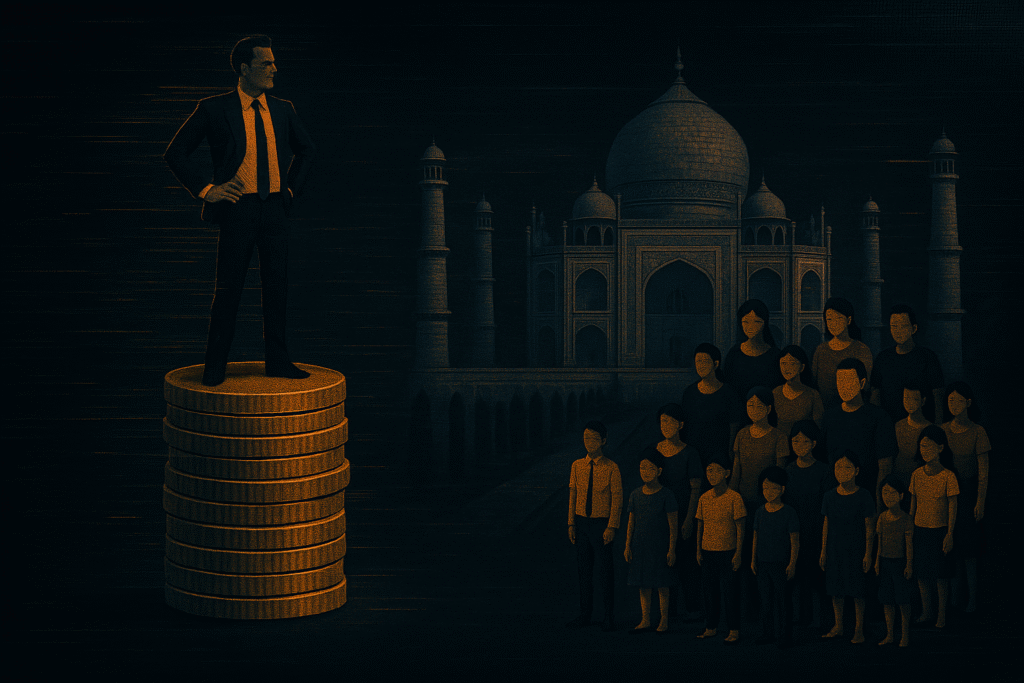
The reality today is that India is divided between billionaires and slums.
The richest 1% hold 40% of the wealth, while 600 million Indians survive on less than $3 a day.
The BJP is adding fuel to the fire: discriminatory citizenship laws, lynching of Muslims, marginalization of Dalits.
An “ethnic democracy” according to Jaffrelot, where the Hindu passport becomes the key to accessing rights.
This explosive mix of social and industrial divisions could cause the Indian dream to implode.
Modi’s challenges increasingly resemble an unsolvable puzzle: how can one build a global power when the country is so deeply divided among countless ethnic groups, imports most of its goods, and exports its brains?
BRICS: on the geopolitical chessboard
Multi-alignment: juggling between empires
The Jaishankar doctrine, this permanent balancing act, allows New Delhi to buy Russian oil at a discount while signing military contracts with Washington.
A balancing act reminiscent of the strategy employed by other key players such as Erdogan's Turkey.
But for how long?
In 2023, India increased its imports from Russia by 1,400% while becoming the United States' largest trading partner.
A risky double game as the EU threatens to sanction its refined fuels.
China: both the biggest partner and the biggest competitor
$135 billion in trade in 2022: China and India are dancing on a volcano.
Behind the technological agreements of 2024 (six French EPR reactors in Jaitapur, space cooperation with Washington) lies a deadly dependency.
India imports a huge amount of goods from China while at the same time deploying Russian S-400s on the Chinese border.
A strategic schizophrenia that raises many questions for analysts around the world.
This dangerous geopolitical game places India at the heart of the tensions of the century.
Its ability to maintain this paradox — being an economic pillar of the BRICS while flirting with the Quad — will determine whether the “Asian century” will be written entirely in Mandarin, or if India will manage to write a few lines of it in Devanagari.
The West: the illusion of an alliance
Since Obama's “pivot to Asia,” Washington has dreamed of making India a bulwark against Beijing.
But New Delhi is still playing its own game: buying Russian oil despite sanctions, refusing to condemn Moscow despite Western pressure, trading with Tehran despite enormous tensions with the West and Israel.
The economic reality and the $135 billion in trade with China in 2022 speak louder than Atlanticist rhetoric.
India accepts US dollars but rejects moral lessons—a pragmatism that exasperates Washington and especially Brussels, which still hopes to “buy” people, as it has done in previous decades.
Negotiations for an EU-India free trade agreement have been going round in circles since 2013.
New Delhi refuses to back down on data protection and environmental standards, while Europe hesitates over visas for IT specialists — a wavering dance that reveals the Old Continent’s chronic inability to grasp the reality of a multipolar world.
The real deal is happening elsewhere: 26 Rafale Marine fighter jets ordered from France, Scorpène submarines in kit form, technology transfers under embargo.
This diplomatic tango shows the limits of India as an “ally.”
Between self-serving partnerships and rejected vassalage, the West is discovering to its cost that the multipolar century is negotiated in cash—not in treaties.
Laboratory of the multipolar world
Neither East nor West
India is reinventing the rules of the game: neither an imported liberal model nor Chinese authoritarianism. Its “third way” combines technological nationalism and post-colonial heritage. It is a combination that most politicians find difficult to understand or master.
The country runs on coal while leading the International Solar Alliance—a double standard in energy policy typical of a power that refuses to choose between development and sustainability.
A logic that challenges Western democratic dogmas.
Digital sovereignty: the new challenge
New Delhi declares war on GAFAM: taxes on digital giants, local data law, aggressive promotion of Paytm and other homegrown unicorns.
With 60 internet shutdowns in 2016 and $39 billion raised by startups in 10 years, India is flexing its muscles.
But behind Freshworks' success lies 90% imported electronic components – an illusion of independence.
Ecology: the great dilemma
India is full of paradoxes: 500 GW of green energy promised by 2030, but 70% of electricity still comes from coal.
Demographic pressures on resources (NATO Demographic Review) illustrate the impasse.
The country is banking on thorium for its nuclear industry while subsidizing rural solar power. This is an unstable balance, threatened by cross-border water conflicts between 600 million Indians and their neighbors.
India, a geopolitical and commercial crossroads rapidly approaching its moment of truth
This geopolitical laboratory is dizzying: between disruptive innovations and structural contradictions, India embodies the convulsions of a world in flux. Its destiny will depend on its ability to transform its weaknesses into strengths—or to be consumed by its own contradictions.
Twenty-first-century India embodies the paradox of a power on borrowed time: caught between a demographic dividend and endemic unemployment, geopolitical multilateralism and gaping social divisions.
To avoid implosion, New Delhi will have to reconcile fierce sovereignty with structural reforms—otherwise, its dream of greatness will remain a mirage on the world stage, which risks stagnating for a long time to come.
To understand India is to accept that it will never be the West, nor an Asian copy of China that would take a similar direction.
It is a hybrid, post-colonial power in search of sovereignty, oscillating between tradition and modernity, spirituality and strategic realism.
It is a country where you find some of the most religious people in the world, but also a country where the upper class is one of the most forward-thinking in the world in terms of computing, technology, and worldview.
It is not a relay for Western hegemony, but neither is it a satellite of Moscow or Beijing.
To believe that India, because it is part of BRICS, will always align itself with China or Russia is to profoundly misunderstand India, but also to misunderstand the very principle of a multipolar world.
Because the multipolar world is not the BRICS bloc against the Western bloc.
The multipolar world is primarily made up of major powers that serve their own interests but reject the hegemony of one power over all others.
And India is, in its own way, the laboratory of the multipolar world: diverse, contradictory, but unavoidable.
And perhaps that is precisely its greatest strength.


0 Comments